What is THCA? A clear guide to the raw cannabinoid
What is THCA? THCA (tetrahydrocannabinolic acid) is the raw, acidic cannabinoid that hemp produces in the resin glands of its flowers. It is the precursor form of THC: same backbone, plus one carboxyl group (C22H30O4). On Delta-Lab product pages, THCA flowers list between 15% and 32.58% THCA.
You’ll see “THCA”, “THCa” or “THC-A” depending on the shop. Same molecule. This guide covers what it is, where the plant makes it, how it differs from THC, which products contain it and how to read the percentage on a label.
What is THCA, exactly?
THCA is a cannabinoid acid, one of the molecules hemp makes on its own, like CBDA or CBGA. The “A” at the end stands for acid: it’s the acidic version of tetrahydrocannabinol, or THC.
The acid part is a small group of atoms called a carboxyl group (COOH). That’s why the formulas differ: C22H30O4 for THCA (PubChem), C21H30O2 for THC. One carbon and two oxygens apart, and you have two different molecules.
In natural flower, the THCA is what the living plant made itself, and it’s still there in the dried flower.
Where does THCA come from in the plant?
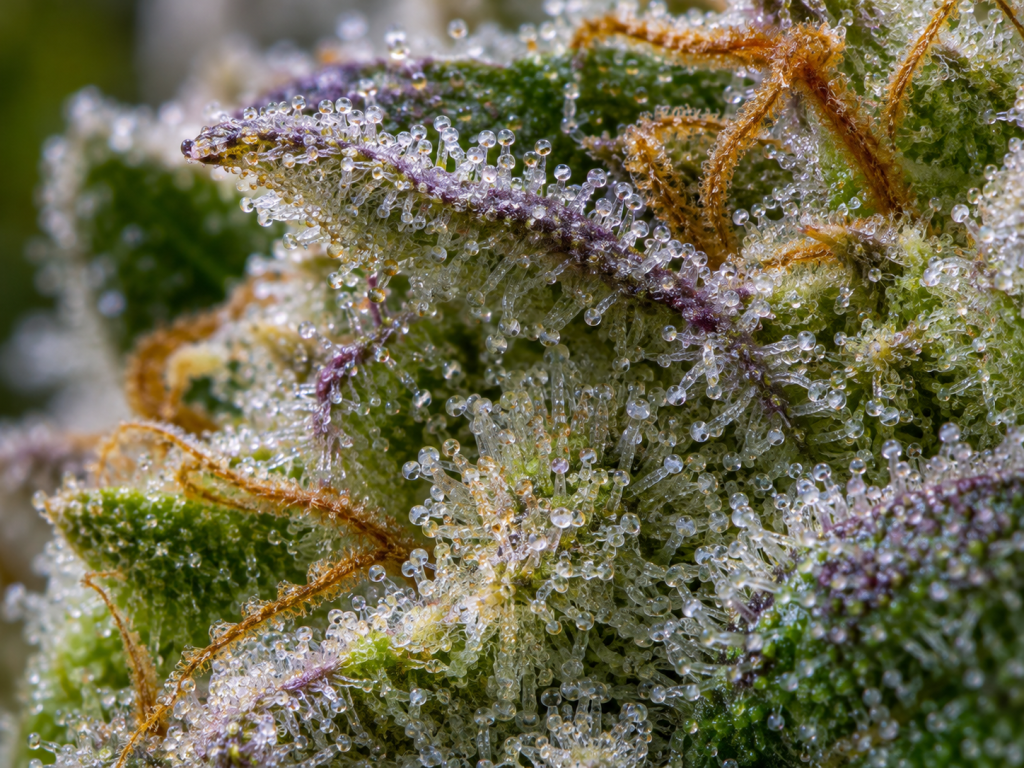
THCA is made inside the trichomes, the tiny resin glands that give a flower its frosty look. A 2005 study from Japanese researchers showed that the enzyme behind it, THCA synthase, is only expressed in the secretory cells of those glands (Sirikantaramas et al., Plant and Cell Physiology, 2005).
The starting block is CBGA, often called the “mother cannabinoid”. THCA synthase turns it into THCA (Drug Discoveries & Therapeutics, 2009). Other enzymes turn the same CBGA into other cannabinoids, and a strain’s genetics decide which one wins.
The practical takeaway: it’s all in the resin. A flower covered in trichomes is more likely to show a high THCA percentage, and hash, which is basically collected trichomes, usually starts higher.
Is THCA the same as THC?
No. THCA is the acid form the plant makes; THC is the form without the carboxyl group. Close relatives, different molecules.
| THCA | THC | |
|---|---|---|
| Full name | Tetrahydrocannabinolic acid | Tetrahydrocannabinol |
| Formula | C22H30O4 | C21H30O2 |
| Form | Acid (with carboxyl group) | Neutral (no carboxyl group) |
| Made by | The plant, in its trichomes | Not made directly by the plant’s enzyme |
Effects and legal status vary from one European country to the next, so we keep them on a dedicated page: THCA effects and legality in Europe.
Which products contain THCA?
You’ll find THCA in four main formats: flower, hash, vapes and extracts. Here’s what Delta-Lab’s product pages show as of 14 November 2026.
| Format | What it is | What the product page shows | Examples |
|---|---|---|---|
| Flower | Dried hemp flower, as is | THCA: 15% to 32.58% | Gelatti (32.58%), Iced Runtz (30.91%), Jelly Pop (22.14%) |
| Hash | Trichomes separated from the flower and pressed | THCA: 30.19% to 32.41% | Afghan Brownie (30.19%), Red Lebanese (32.41%) |
| Vapes | 510 cartridges (battery not included) or ready-to-use disposables | Size and mg of extract | 0.5 g and 1 g sizes |
| Extracts | Extracted resin: live rosin, live resin, badder, crumble, diamonds & sauce, crystalline | Details on each product page | Extracts range |
Flower, hash and extracts follow one simple rule: the more you isolate the resin, the higher the number. Flower keeps its plant material, hash keeps little more than trichomes, extracts go further still.
How do you read a THCA percentage?
The THCA percentage is a share of the product’s weight. A flower at 25% holds 250 mg of THCA per gram; at 30%, 300 mg.
Three things to check on any product page:
- An exact number. “26.34%” comes from a measurement. “Up to 35%” tells you very little.
- “Natural” or “Infused”. Delta-Lab puts it in the product name. A natural flower shows what the plant produced on its own; an infused flower has been enriched after harvest with a hemp extract.
- Lab analyses. At Delta-Lab, analyses are available on request: ask through our contact page or the 24/7 assistant.
FAQ
What does THCA stand for?
Tetrahydrocannabinolic acid. The “A” means acid, which is the difference with THC. You’ll also see it written THCa or THC-A.
Is THCA the same as CBD?
No. They’re two different cannabinoids that the plant builds from the same starting point, CBGA. THCA’s direct counterpart on the CBD side is CBDA, the acid form of CBD.
Why does hash show more THCA than flower?
Because hash is made of trichomes, where the plant makes THCA. Remove the plant material and the percentage goes up: on our site, hash starts at 30.19%, while flower starts at 15%.
Does THCA give flower its smell?
Not really. Smell and taste come mostly from terpenes, other molecules made in the same trichomes. Two flowers with similar THCA can have very different aroma profiles.
Who can buy THCA products?
Delta-Lab products are for adults 18 and over only. Never consume before driving.
Where to start
Now you know what THCA is, the easiest next step is to compare formats side by side: flower, hash, vapes and extracts are all in our THCA range, with the percentage on every product page. Order before 3 pm on a weekday and your parcel ships the same day with Chronopost. Adults 18+ only.
Sources
Pages opened on 14 November 2026.
- PubChem — Tetrahydrocannabinolic acid (CID 3082459): formula C22H30O4
- Sirikantaramas, Taura, Tanaka, Ishikawa, Morimoto, Shoyama — Plant and Cell Physiology 46(9), 2005: THCA synthase expressed in the secretory cells of trichomes
- Studies on THCA synthase — Drug Discoveries & Therapeutics 3(3), 2009: THCA synthase converts CBGA
The news in your inbox
One email when there is a new drop or a deal. Never more than one a week.
One-click unsubscribe in every email.