

EFFECTS & LEGALITY OF THCA IN EUROPE
What is THCA, what are its effects and how is its status changing in Europe? Here are the key points to understand THCA , how it works and the rules to check before buying.
- THCA effects
- Legality in Europe
- Situation in France
- COA & lab tests
THCA: a legal loophole born in the USA
It all starts in the United States in 2018, with the passing of the Farm Bill, an agricultural reform that looked harmless but proved decisive for the hemp industry.
This law legally redefines the term hemp as any part of the cannabis plant containing less than 0.3% Δ9-THC. This simple threshold opened an unexpected legal door: since all the other forms of THC — acids, isomers, metabolites or derivatives — were not named in the law, they did not fall under the definition of prohibited cannabis.
From then on, thousands of American companies began selling so-called hemp-derived THC products: THCA-rich flowers, Δ8-THC cartridges, syrups and edibles labelled "< 0.3% Δ9-THC" but with effects identical to recreational cannabis.
This loophole, this gap in the law, sparked a real green rush: a parallel market, legal on paper but scientifically equivalent to traditional THC.
Some US states quickly tried to close the gap, while others chose to regulate or tax these new derivatives.
As long as a product contains less than 0.3% Δ9-THC and comes from hemp, it can be sold freely — even if it produces the same effect as regular cannabis.
This logic, born across the Atlantic, then shaped the growth of the THCA market in Europe, where the 0.3% Δ9-THC threshold also plays a central role in hemp regulation.
The European situation on THCA and key case law
In Europe, the debate around THC and THCA was not built on a "loophole" like the one in the United States, but largely around the principle of free movement of goods.
This principle was illustrated in 2020 by the Court of Justice of the European Union in its ruling known as Kanavape. The Court pointed out that a Member State must be able to justify a restriction by the aim of protecting public health, and must respect the principle of proportionality.
This decision has become a major reference in European litigation on hemp products and has deeply influenced the way Member States approach cannabinoids.
However, the rules that apply to THCA still depend on national law, the exact nature of the product and its lab analysis: they can therefore differ from one European country to another.
The Kanavape ruling is now one of the most important decisions on the movement of hemp products within the European Union. It is regularly cited when a country wants to restrict a cannabinoid or a hemp-derived product.
To understand what this means in practice for a consumer in France, you then need to look at the national classification of narcotics and the specific rules for products containing THCA.
The situation in France: practical points to remember
France tells the different cannabinoid substances apart through its narcotics regulations and the rules that apply to hemp products.
For THCA, it is therefore essential to distinguish the molecule in its acid form from Δ9-THC, while checking the actual composition of the finished product and its compliance with the rules in force when it is sold.
Classifications can change, and some cannabinoids have been the subject of successive regulatory updates. Lab testing of the batch therefore remains essential.
Δ9-THC is a regulated substance, and the threshold that applies to hemp must be respected.
THCA is the acid precursor form of THC and has a distinct chemical structure.
A lab COA shows the exact concentrations in the batch and lets you check its composition.
The applicable rules also depend on the product category, how it is presented, its origin and the jurisdiction where it is sold.
That is why it is better to reason from the actual product and its lab analysis rather than from a simple "THCA" sales label.
Checking THCA legality: good habits
Buying THCA today means finding your way between sellers, certificates and sales claims of varying precision. A few simple checks already let you tell a documented product from one whose composition cannot be verified.
Always start with the COA
The Certificate of Analysis lets you check the Δ9-THC level, the other cannabinoids detected, the testing method, the test date and, ideally, the batch number concerned.
Check the label
Composition, quantity, batch number, seller or manufacturer details and product instructions let you check its traceability and avoid anonymous products.
Beware of unrealistic levels
Extremely high concentrations presented as "natural" should prompt you to check the COA carefully, along with the nature of the product and whether it has been infused or had cannabinoids added.
Ask for traceability
The batch certificate, its origin and the details linking the product sold to the lab report are the most useful things for checking what you are really buying.
In short, three things matter most: transparency, testing and traceability. The better documented a product is, the more its actual composition can be checked.
-
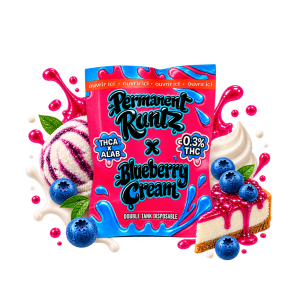
 Out of stockRated 5.00 out of 5 based on 1 customer rating62,70 € – 294,90 €Price range: 62,70 € through 294,90 €This product has multiple variants. The options may be chosen on the product page
-
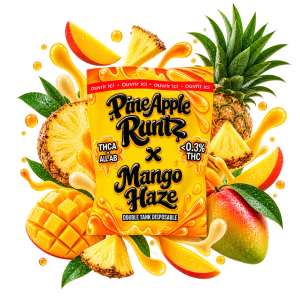
 Out of stockRated 5.00 out of 5 based on 2 customer ratings62,70 € – 294,90 €Price range: 62,70 € through 294,90 €This product has multiple variants. The options may be chosen on the product page
-
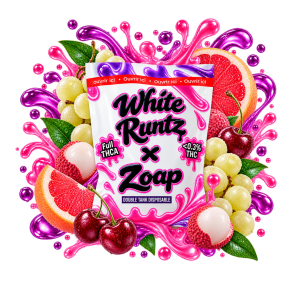
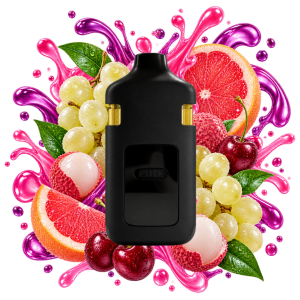 Out of stockRated 5.00 out of 5 based on 1 customer rating72,90 € – 347,90 €Price range: 72,90 € through 347,90 €This product has multiple variants. The options may be chosen on the product page
-
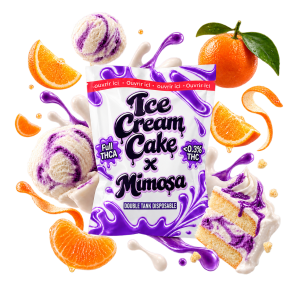
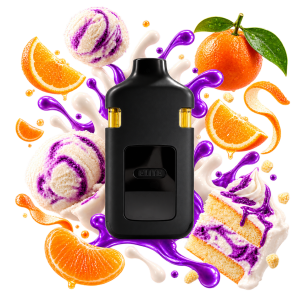 Out of stockRated 5.00 out of 5 based on 1 customer rating72,90 € – 347,90 €Price range: 72,90 € through 347,90 €This product has multiple variants. The options may be chosen on the product page